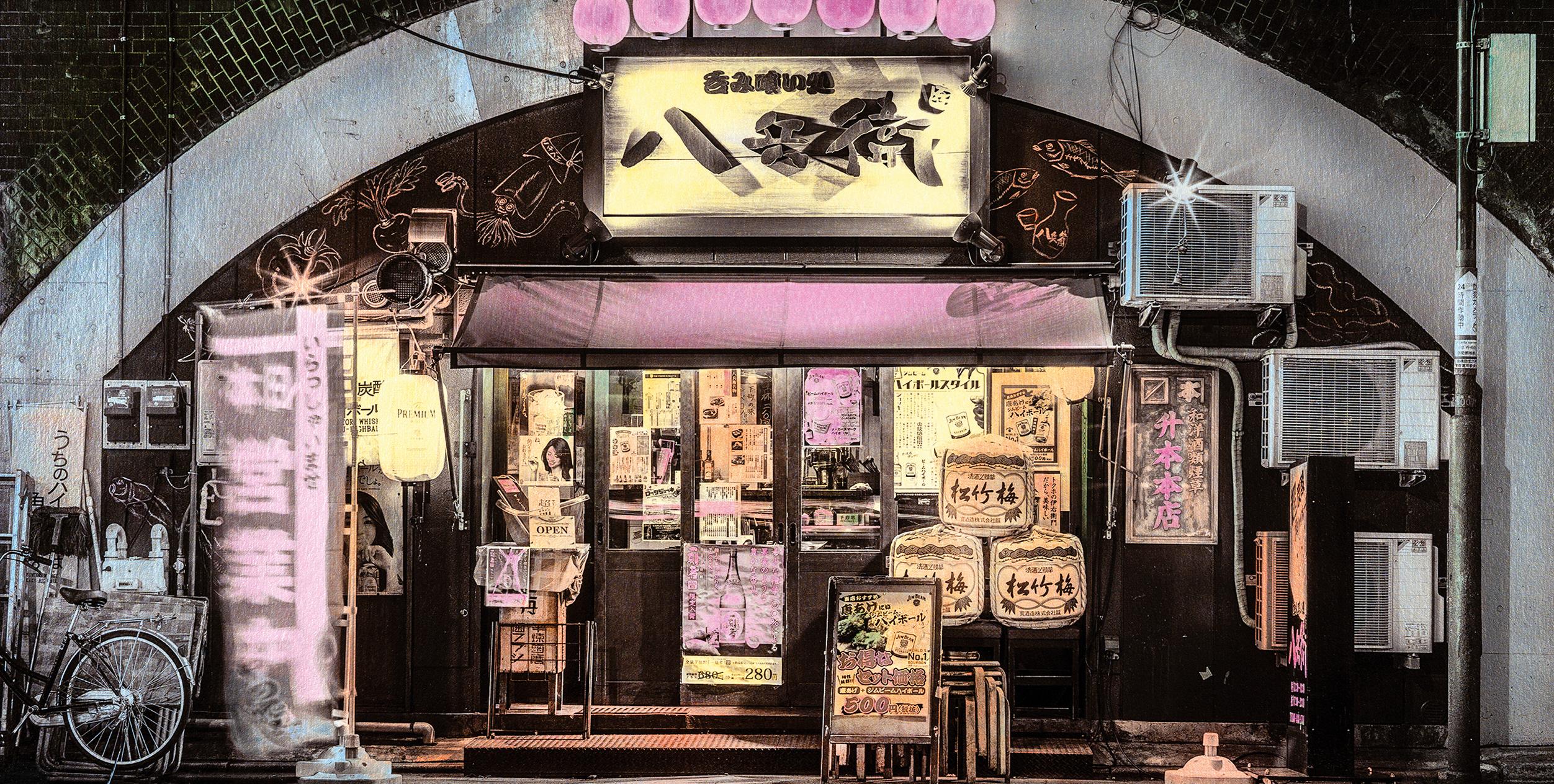
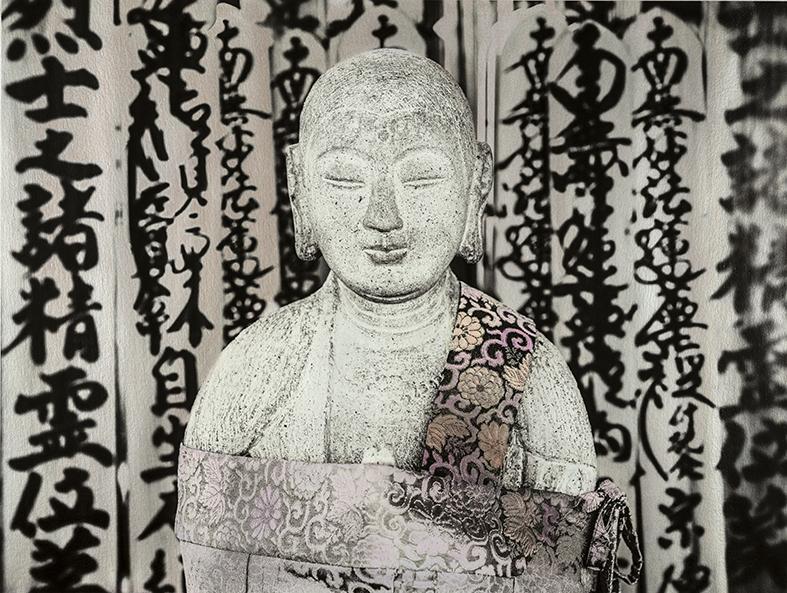
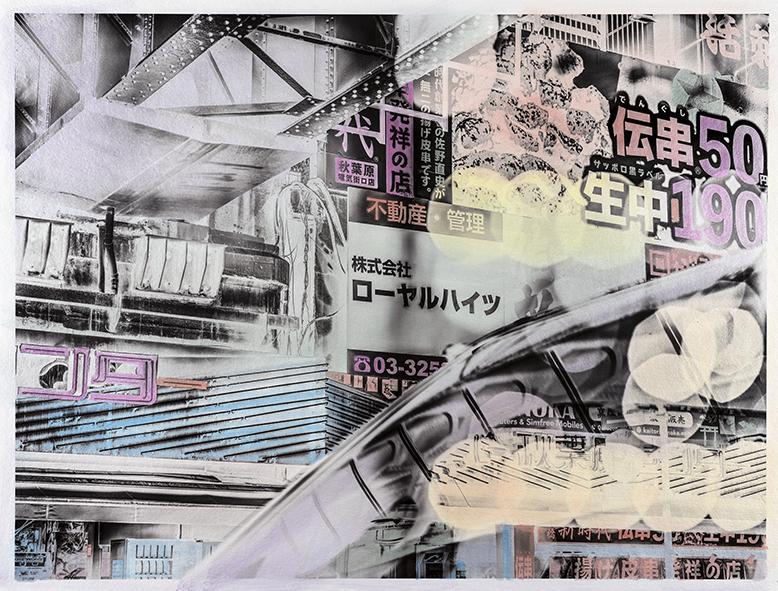
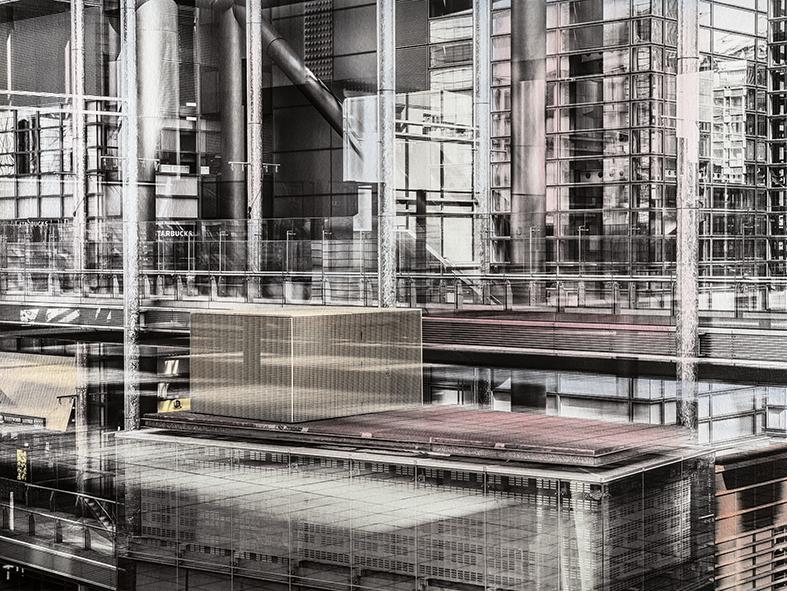
In his current exhibition yellow line, the Munich-based photographic artist Michael Nischke draws on a photographic practice that was widespread in Japan around 1860 to 1910 (Edo and Meiji periods): hand-colored black-and-white photographs.
The technique of hand coloring emerged shortly after the invention of chemical photography (1826 – the first heliography 200 years ago in France), but it only became truly relevant in Japan from the 1860s onwards and was gradually displaced with the advent of true color processes around 1910. At that time, classical hand coloring of black-and-white photographs – packaged in luxurious souvenir albums – found many enthusiasts. The motifs often reflected an idealized image of “old Japan.” Landscapes and famous places, scenes of daily life, as well as well-known buildings and temples, were very popular. Today, Nischke uses this special combination of photographic accuracy and painterly interpretation for his works created during many travels in Japan over the years.
In doing so, he uses transparent watercolors (glazes) and thus creates a kind of woodcut aesthetic (Ukiyo-e). The special thing: His current choice of subjects, which offers a diverse insight into the life and culture of Japan. The use of special paper with a silvery-glossy coating also gives the colors a unique transparency and lightness. In this way, this traditional technique produces unique, magical original pieces: Each picture is unmistakable.